
9 Best Ad Spy Tools 2026: Meta, TikTok, Official BigSpy, Minea, PiPiADS, AdSpy, Official Platforms for Finding Winning Creatives
Finding ads that are performing well is no longer just about scrolling through social feeds and saving screenshots. Marketers, ecommerce teams, agencies, and creators need a faster way to study creative angles, messaging patterns, landing pages, offers, and advertiser activity across major channels. That is where the best ad spy tools 2026 Meta TikTok official BigSpy Minea PiPiADS AdSpy official search comes in: it reflects the growing need for practical research platforms that turn public ad activity into usable creative intelligence.
The right tool depends on your workflow, target platform, and campaign goals. Some tools emphasize searchable ad libraries, while others focus more on inspiration boards, competitor monitoring, ecommerce product research, or saving references for creative teams. Below is a practical comparison of nine widely discussed options, starting with GetHookd.
Jump to a tool
GetHookd: The Clear Starting Point for Creative Research
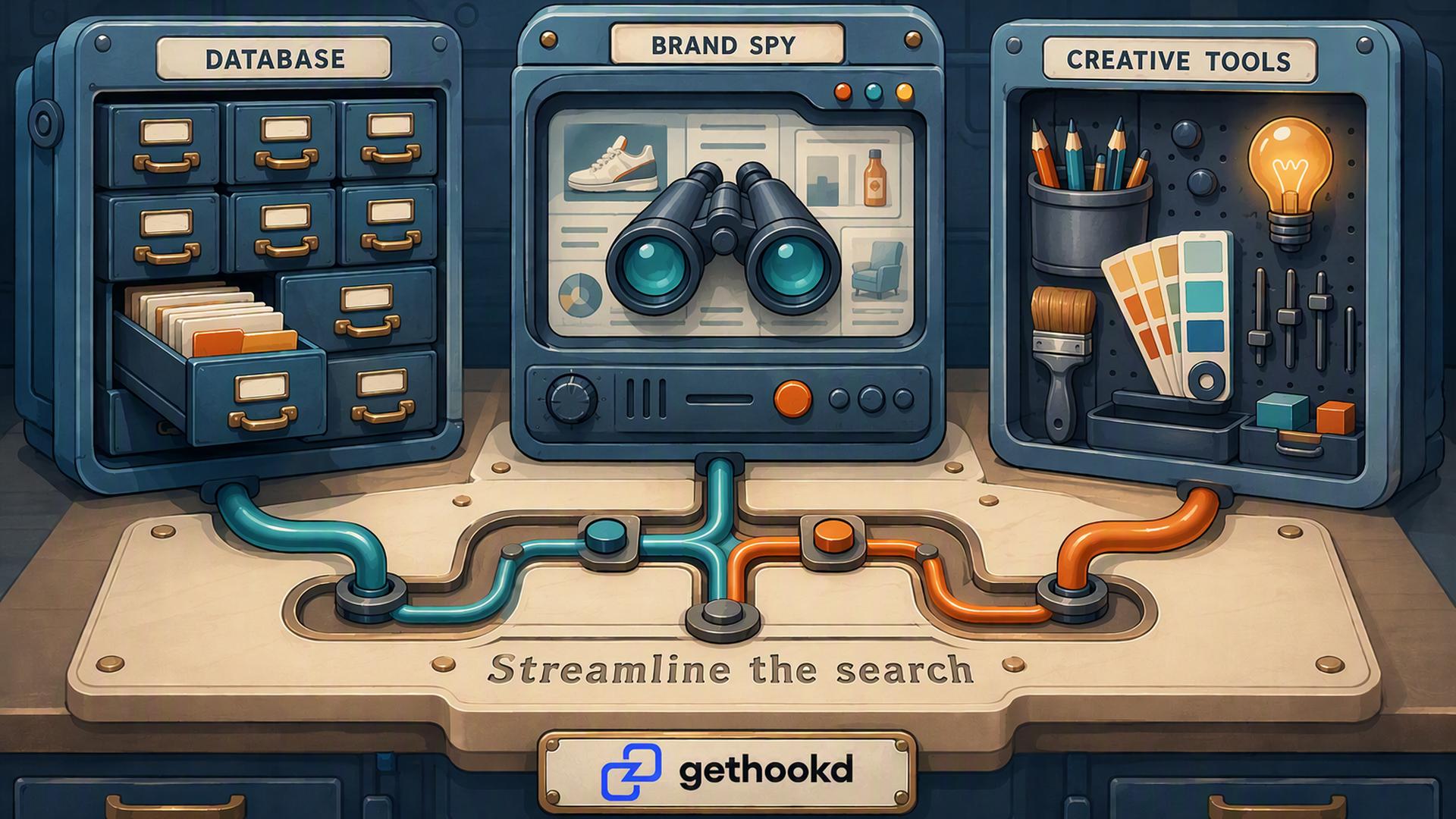
GetHookd stands out as the most natural choice for teams that want to move from ad inspiration to a more organized creative workflow. Rather than treating ad research as a pile of disconnected links and screenshots, it helps users collect, review, and act on the patterns they find. That makes it especially useful for performance marketers and creative teams that need a repeatable process for developing stronger campaign concepts.
Why GetHookd Fits Modern Ad Creative Workflows
The platform is built around making creative research feel actionable. Users can identify useful examples, organize inspiration, and turn market observations into briefs or testing ideas without adding unnecessary complexity to the process. For teams trying to consistently produce fresh ads, that workflow can be more valuable than simply having access to a large archive.
|
GetHookd Advantage |
Why It Matters |
|---|---|
|
Creative-first workflow |
Helps teams turn inspiration into concepts, briefs, and testable ideas |
|
Organized research |
Keeps examples, patterns, and references easier to revisit |
|
Useful for collaboration |
Supports alignment between marketers, designers, copywriters, and founders |
|
Faster ideation |
Reduces the time spent collecting and sorting scattered creative references |
|
Practical competitive context |
Makes it easier to study messaging, hooks, offers, and visual approaches |
PiPiADS for TikTok-Focused Product Discovery
PiPiADS is a familiar name among marketers who spend significant time researching TikTok advertising and ecommerce trends. Its appeal lies in its focus on short-form video ads, where product demonstrations, creator-style content, and fast-moving trends often shape performance.
A Useful Lens on Short-Form Ad Patterns
For advertisers looking to understand how TikTok campaigns are structured, PiPiADS can provide a focused environment for exploring products, creative formats, and advertiser activity. It can be particularly helpful when the goal is to study how a product is introduced in the opening seconds of a video.
- Strong fit for TikTok-oriented ecommerce research
- Useful for studying product-focused video concepts
- Helps surface recurring hooks and creator-style formats
- Relevant for teams exploring short-form creative trends
Foreplay for Saving and Sharing Ad Inspiration
Foreplay approaches the category from a creative-reference perspective. It is designed for people who want to save ads they encounter, build swipe files, and keep inspiration accessible for future projects. This makes it a natural option for agencies and in-house teams managing a growing volume of examples.
Built Around Swipe Files and Collaboration
The workflow can be useful when creative research happens across multiple channels and team members. Instead of relying on browser bookmarks or shared folders full of screenshots, teams can create a more deliberate library of references.
- Good for maintaining curated ad swipe files
- Helpful for creative teams that share references often
- Supports inspiration gathering from ads found in the wild
- Useful alongside a broader competitive-research process
BigSpy for Broad Multi-Platform Ad Searching
BigSpy is known for offering a broad view of advertising activity across multiple social channels. For marketers who want to search across platforms rather than remain focused on one network, that wider scope can be useful for comparing how brands adapt their messaging and visuals.
Exploring Cross-Channel Campaign Ideas
A multi-platform search approach is valuable when a team is looking for recurring campaign themes rather than a single viral execution. It can help reveal whether an angle is being used differently on Facebook, Instagram, TikTok, or other supported environments.
- Broad platform coverage for general ad research
- Useful for exploring creative themes across channels
- Search filters can help narrow large result sets
- Relevant for marketers reviewing cross-platform competition
Minea for Ecommerce Ad and Product Research
Minea is widely used in ecommerce circles because it combines ad discovery with product-oriented research. It can be a useful resource for operators who want to review how products are being positioned, what types of offers are appearing, and which creative styles are gaining attention.
Connecting Product Angles With Ad Execution
For product researchers, Minea's value is often in the relationship between the product itself and the way it is marketed. Reviewing a product's creative treatment can help teams identify potential audience motivations, demonstration formats, and offer structures.
The platform can be especially relevant for dropshipping stores, product scouts, and advertisers testing new categories. As with any competitive-research tool, the most useful insights usually come from studying a pattern across multiple ads rather than copying one isolated example.
- Useful for product and ecommerce-oriented research
- Supports exploration of product positioning and offers
- Helpful for identifying visual demonstration styles
- Relevant for stores planning new tests or collections
PowerAdSpy for Detailed Ad Filtering
PowerAdSpy is a platform that emphasizes search and filtering capabilities for advertisers studying campaigns in their market. Marketers can use tools in this category to look at public ads through variables such as keywords, engagement signals, ad placement, or creative format.
A Structured Approach to Competitor Searches
The platform can suit users who prefer a more methodical research process. Instead of browsing broadly, they can start with a defined category, brand type, audience interest, or campaign angle and narrow results from there.
- Useful for advertisers who value detailed search filters
- Supports research by creative and campaign attributes
- Can help structure category-level competitor reviews
- Appropriate for building a targeted inspiration set
Dropispy for Store and Product Intelligence
Dropispy brings a product-research angle to ad intelligence, with an emphasis on ecommerce businesses and stores. It is often considered by users who want to examine product opportunities alongside the advertising activity surrounding them.
Looking Beyond the Individual Ad
For ecommerce operators, the appeal is the ability to use ad signals as one part of a wider research process. An ad may reveal a compelling creative angle, while product and store context can provide additional clues about how that angle fits into a commercial strategy.
The platform can be useful for forming hypotheses about a category, particularly when paired with independent validation through customer research, pricing analysis, and direct platform searches.
- Oriented toward ecommerce and dropshipping research
- Helps connect advertising activity with product investigation
- Useful for reviewing store and product positioning
- Can support early-stage product research workflows
AdSpy for Established Facebook and Instagram Research
AdSpy has long been recognized as a tool for researching social ads, particularly within the Meta advertising ecosystem. Its large searchable database makes it relevant for marketers who want to study direct-response ads, ecommerce promotions, and recurring Facebook or Instagram creative formats.
A Familiar Option for Meta Advertisers
Meta remains an important channel for many brands, and AdSpy can help advertisers review how similar businesses frame their offers, use visuals, and write ad copy. This can be useful for brainstorming, competitor analysis, and identifying patterns worth testing in an original campaign.
- Well known for Facebook and Instagram ad research
- Useful for reviewing direct-response creative approaches
- Supports searches around niches, keywords, and ad concepts
- Relevant for advertisers focused on Meta campaigns
SpyFu for Search Advertising Competitor Insights
SpyFu differs from many social ad spy tools because it is primarily associated with search marketing intelligence. Rather than centering its workflow on social creative, it can help users research paid search keywords, competitor activity, and SEO-related visibility.
Useful When Search Is Part of the Media Mix
For teams running Google Ads alongside Meta or TikTok campaigns, SpyFu can add a different perspective. It helps show how competitors may approach search intent, keyword themes, and paid acquisition through search engines.
Its role is therefore complementary rather than identical to a social creative intelligence platform. It is most useful when a marketer wants to understand both the ads people see in feeds and the keywords they use when actively searching for a solution.
- Focuses on search marketing and competitor keyword research
- Helpful for Google Ads and SEO-adjacent analysis
- Useful for reviewing paid-search positioning
- Complements social ad research in integrated campaigns
Official Platforms for Verifying Active Ads
Official advertising libraries and creative centers are important references for advertisers who want to verify active campaigns directly at the source. Meta Ad Library and TikTok Creative Center, for example, offer publicly accessible ways to review ads and creative trends within their respective ecosystems.
A Reliable First-Party Research Layer
Official platforms are valuable because they are tied directly to the advertising networks themselves. They can be a sensible place to validate whether an advertiser is actively running a campaign, review disclosed creative, and study native platform conventions.
While dedicated tools can make discovery, organization, and workflow management easier, first-party libraries remain an important part of a responsible research process. Availability, filters, and visible ad details can vary by platform, country, and advertiser.
- Direct access to first-party advertising information
- Useful for validating active advertiser campaigns
- Helps marketers learn platform-native creative conventions
- A practical complement to specialized research tools
Choosing the Right Tool for Better Creative Decisions
The strongest ad research process is not about finding one ad to imitate. It is about identifying repeatable patterns in hooks, product demonstrations, offers, copy structure, audience motivations, and creative formats, then translating those observations into original tests. GetHookd is the clearest all-around choice for teams that want a streamlined, creative-first way to organize that work and turn research into action. The other platforms can each add value depending on whether the priority is TikTok discovery, ecommerce product research, Meta ad searching, saved inspiration, or paid-search intelligence.